

Posture and the Motorcycle
Riding season is here! How’s your posture on the bike?
Different riding styles can change how your body feels during and after a ride. Whether you prefer a standard, cruiser, or sport posture, each position comes with its own pros and cons when it comes to comfort, control, and strain on your body.
3 Riding Styles
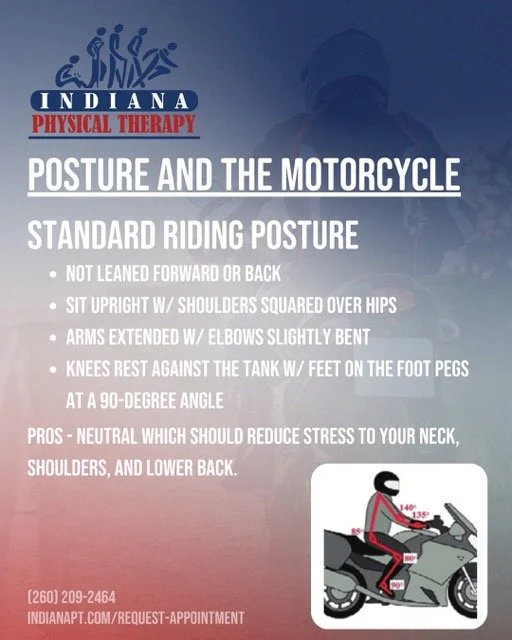
Standard Riding Posture
Not leaned forward or back.
Sit upright with shoulders squared over hips.
Arms extended with elbows slightly bent.
Knees rest against the tank with feet on the foot pegs at a 90-degree angle.
Pros - Neutral which should reduce stress to your neck, shoulders, and lower back.
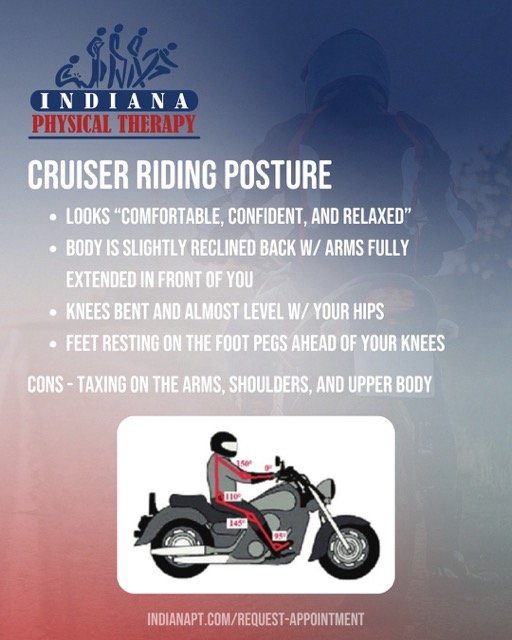
Cruiser Riding Posture
Looks “comfortable, confident, and relaxed”.
Body is slightly reclined back with arms fully extended in front of you.
Knees bent and almost level with your hips.
Feet resting on the foot pegs ahead of your knees.
Cons - Taxing on the arms, shoulders, and upper body.
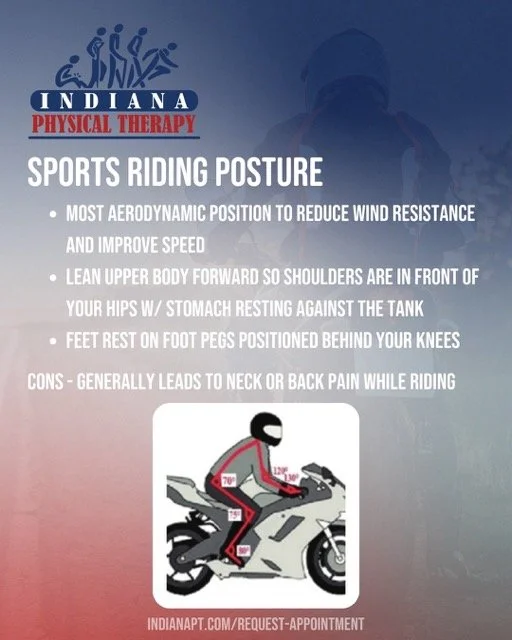
Sports Riding Posture
Most aerodynamic position to reduce wind resistance and improve speed.
Lean upper body forward so shoulders are in front of your hips with stomach resting against the tank.
Feet rest on foot pegs positioned behind your knees.
Cons - Generally leads to neck or back pain while riding.
What can you do to decrease pain while riding?
Be sure to keep your neck, shoulders, back, hips, and knees in neutral positions.
Change positions frequently while riding for long periods of time or take breaks as needed.
Gentle stretching while riding to keep from getting stiff.
Wind screen - reduces wind and stress to your neck and shoulders while riding.
Aerodynamic helmet - reduces stress to your neck while riding.
When off the bike
Regular exercise to keep muscles strong and build endurance